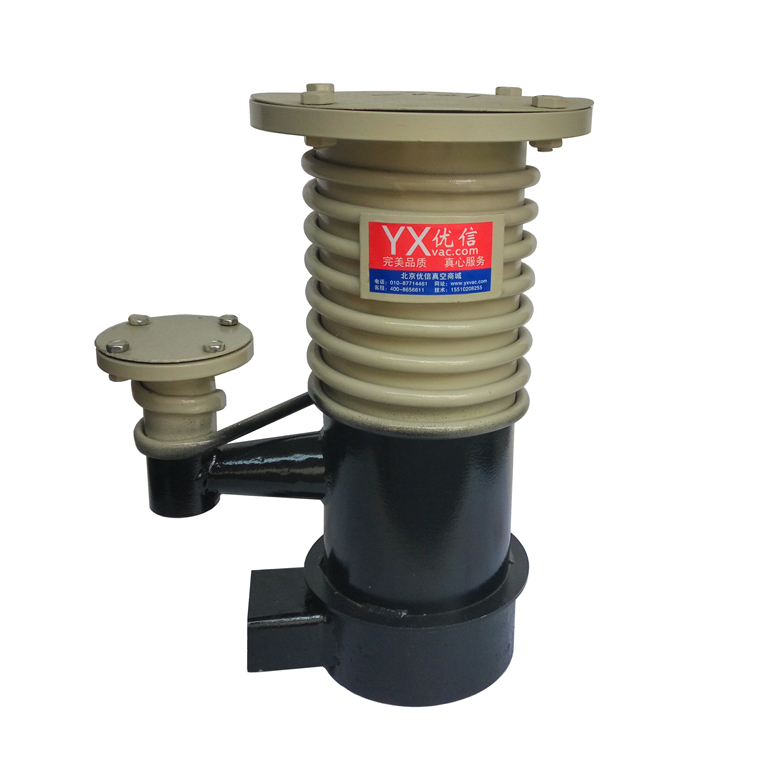
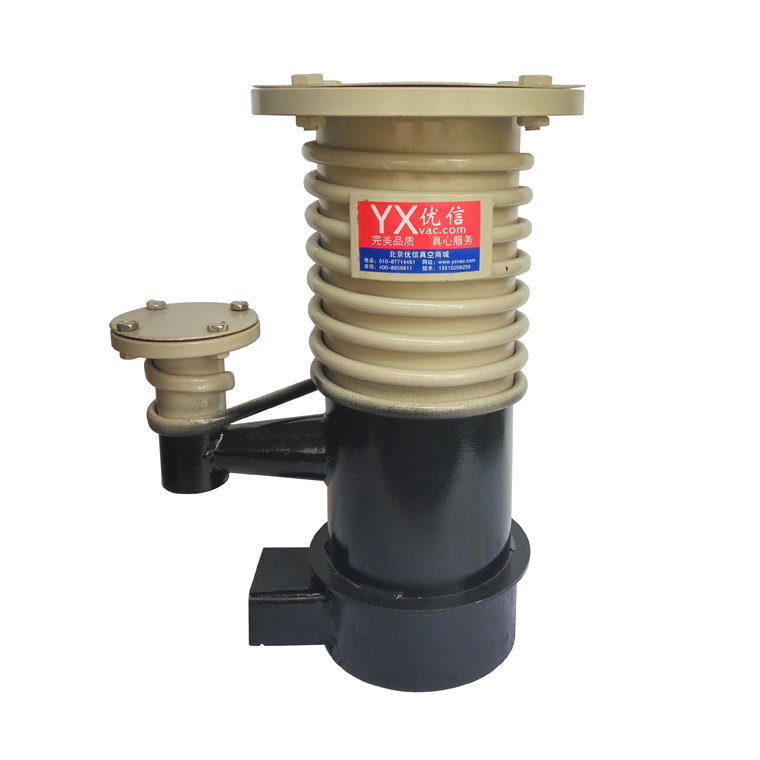
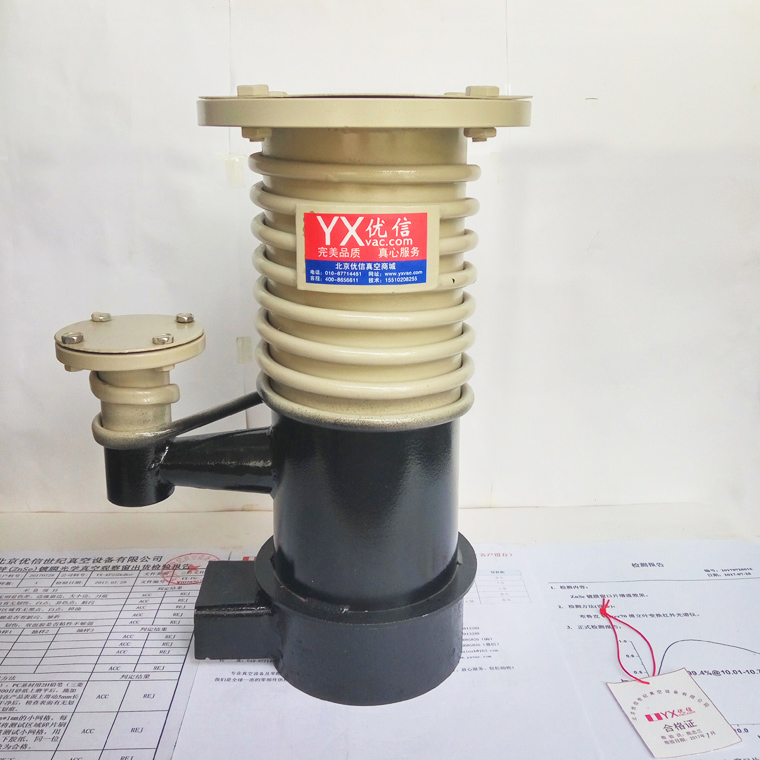
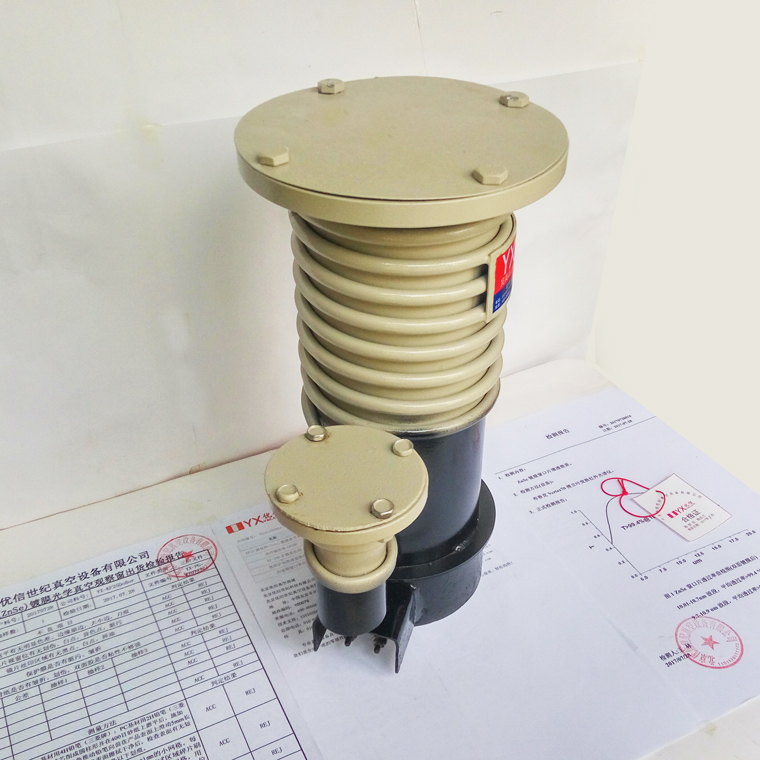
Skries K Metal Oil Diffusion Pumps)
Model/Item | Maximum Pressure (Pa) | Pumping Speed (L/s) | Fore-vacuum Pressure (Pa) | Oil Capacity (L) | Heating Power (kW) | Weight (kg) |
K-100B/K-100 | 7x10⁻⁵ | 300 | 40 | 0.11 | 0.65 | 9 |
K-150 | 800 | 0.3 | 1-1.2 | 17 | ||
K-200 | 1500 | 0.5 | 1.5-1.6 | 22 | ||
K-300 | 3300 | 1.3 | 2.1 | 73 | ||
K-400 | 5300 | 2.5 | 4.8 | 100 | ||
K-500 | 8000 | 7 | 7.8 |
| ||
k-600T | 17000 | 6-7 | 10 |
| ||
K-630 | 13000 | 8 | 14.4 |
| ||
K-630A | 14000 | 8 | 14.4 |
| ||
K-630T | 18000 | 7-8 | 10 |
| ||
K-800 | 22000 | 15 | 19.8 |
| ||
K-1000 | 40000 | 20 | 26 |
|
Introduction:
The K-type metal-oil diffusion pump is used in high-vacuum and ultra-high-vacuum applications to evacuate gases that do not pose a serious hazard to the working fluid in high-vacuum systems. It cannot discharge directly to atmosphere and requires a fore-vacuum pump. This product is used in the electronics, chemical, and nuclear industries, as well as in space simulation testing.
Working Principle of the K-Type Metal Oil Diffusion Pump: After the fore-vacuum pump has created a preliminary vacuum of approximately 10 Pa inside the diffusion pump, the working fluid—which has a low saturated vapor pressure at room temperature—is heated by a heater. The resulting oil vapor rises through the vapor conduit, is directed by several stages of nozzles, and is ejected at high speed, carrying the gas dispersed in the oil vapor to the fore-vacuum pump end. The gas is then discharged into the atmosphere by the fore-vacuum pump. After the oil vapor strikes the pump walls and cools, it flows back to the bottom of the pump, where the process repeats, thereby achieving high vacuum.
1. High pumping speed;
2. Operating pressure range: 10⁻² to 10⁻⁵ Pa;
3. Capable of achieving high vacuum;
4. Simple structure, convenient operation, and easy maintenance.
 USD
USD 

Reviews
0%
0%
0%
0%
0%
Share your thoughts with other customers
Write a Review